

Ranking on Google Doesn't Mean ChatGPT Will Cite You
By Juyel Rana · November 8, 2026 · Updated November 8, 2026
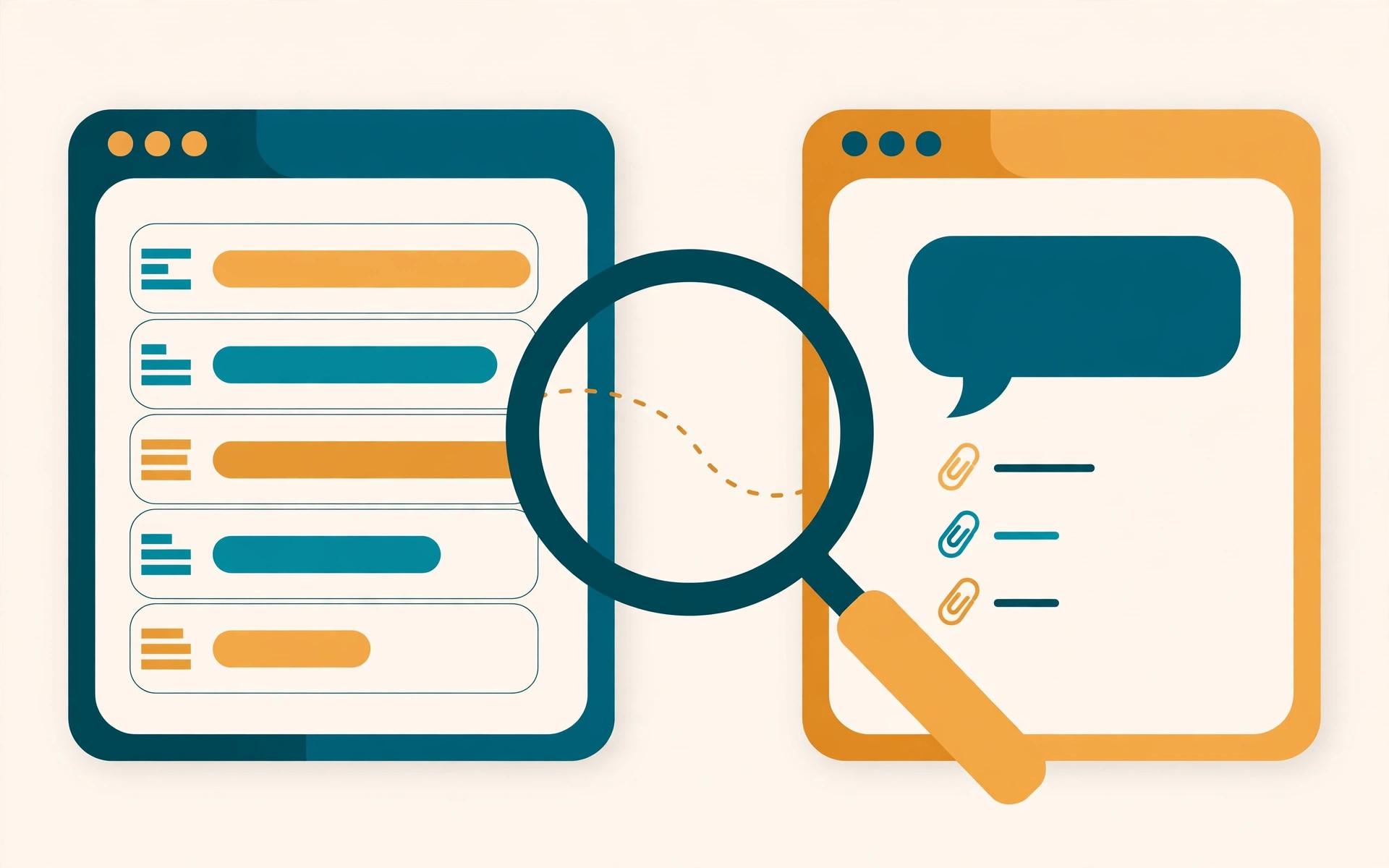
Say a business ranks second on Google for the exact service it sells. The listing is solid, the page is fast, the reviews are good. Then a buyer asks ChatGPT who to hire for that job, and the business never comes up. Not in the shortlist, not in the footnotes, nowhere. That isn't a tracking error. It's what happens when you win one game and assume you've won the other.
Ranking on Google and getting cited by an AI answer look like the same job from a distance. This week we got the clearest measurement yet of how far apart they actually are, and the gap is bigger than most SEOs want to admit.
Four out of every hundred sources
LoudFace ran a study that did the obvious test almost nobody had bothered to do properly. They took 33 questions people ask when they're looking to hire an agency, collected 990 answers per engine from ChatGPT, Perplexity and Google AI Overviews over 30 days, and then checked every single cited source against a snapshot of Google's results for the same questions. Not a sample of the citations — all of them.
Out of ChatGPT's 17,642 cited sources, only 4.1% sat on a domain that ranked in Google's top 10 for the same question. Perplexity did better at 9.6%. AI Overviews, which lives inside Google, still only reached 12.0%. Widen the net to the top 20 and ChatGPT barely moves, to 6.1%.
Now here's the number people will mix up with that one, so keep them separate. About a third of ChatGPT answers — 34.7% — cited at least one top-10 domain somewhere in the answer. That sounds reassuring until you read it properly. It means most answers touch a ranked page at some point, but ranked pages supply only a sliver of what actually gets cited. One link in an answer isn't the same as the answer being built from ranked pages. Two-thirds of ChatGPT answers never touched a top-10 domain at all.
The study also checked whether ranking helps at all, and the honest answer is: a bit, but not the way you'd hope. Agencies were named 3.4 to 3.7 times more often on the questions where they ranked. But when the researchers held the agency fixed — same firm, questions it ranks for versus questions it doesn't — the lift roughly halved, and on Perplexity the range included zero. The most-named agency in the whole study showed up in 59.8% of ChatGPT answers while ranking top 10 on only 4 of the 33 questions. Bigger, better-known firms rank more and get named more. Ranking alone isn't doing most of that work.
Ask with the brand name, get cited. Ask without it, get nothing.
There's a second finding that should change how you read every "AI visibility" report from now on. PressGEO runs a public citation monitor on one publisher's pages, and across 1,000 probes in the same 30-day window, the citation rate was 41.8% on prompts that named the brand — and exactly 0.0% on the 639 prompts that didn't. The blended figure, 15.1%, is arithmetically correct and tells you nothing. It averages a real number with a zero.
That's the split that matters for anyone trying to grow. Branded prompts mostly measure demand you've already created. Non-brand prompts — someone describing a problem instead of naming a company — measure whether the engine will introduce you to a buyer who doesn't know you yet. If your dashboard reports one blended citation rate, you're flying blind on the half that actually brings new business.
One engine's yes is another engine's silence
The deeper problem is that there's no single "AI search" to be visible in. Yext Research looked at 155.5 million AI citations from the first quarter of 2026 and found only about 5% of citations overlap across models. Being visible on ChatGPT says almost nothing about whether Perplexity or Gemini will cite you. Same quarter, same web, different source pools.
AthenaHQ's State of AI Search 2026, built on millions of responses, puts the scale of the gap in plain terms: the average brand gets mentioned in only 16.3% of AI answers about its own category, against 56.5% for the category leaders. A brand's own domain goes uncited in 84% of answers. And where do the citations that do exist come from? Reddit supplies 21.9% of off-page citations — more than double the next source — and the blog is the most common place AI crawlers actually land, at 37.5% of on-page paths. Your archive is doing more of the discovery work than your homepage ever will.
Even a citation isn't a guarantee
One more measurement landed this month, and it's the least comfortable of the lot. The Machine Relations Index resolved citations and checked whether the cited page actually supported the sentence it was attached to. On ChatGPT, 54.5% of resolvable citations held up. On Perplexity, 52.0%. Claude and Gemini didn't produce enough resolvable citations to grade at all. Treat this as a first measurement rather than a settled league table — but the direction is clear enough. Roughly half the time, on the best-measured engine, a citation points at a page that doesn't fully back the claim. A citation is a pointer, not a proof.
So what do you actually do on Monday?
First, find out where you stand on the prompts that matter, split two ways: prompts that name your brand, and prompts that don't. Run the questions your buyers really ask, on each engine separately, and write down where you appear. If you're only tracking one blended visibility score, you're measuring the average of two different realities.
Second, publish pages an engine can actually quote. About 80% of AI citations point to a source a brand can influence — its own site or its listings. That means your About page, your pricing page, your service pages, your support docs and your blog posts are the raw material. Each one should answer a single question properly, with facts and numbers an engine can lift, instead of vague marketing copy it has to guess at.
Third, stop grading yourself only on positions. Positions are a Google metric. Add citations and share of answers to the scoreboard, per engine, and keep branded and non-branded separate. If your non-brand share is near zero, that's the number to fix — it's the one that brings in people who haven't heard of you yet.
And fourth, get named somewhere that isn't your own site. A fifth of off-page citations come from Reddit alone. That doesn't mean spamming communities — it means being the kind of business people actually mention when someone asks for a recommendation. The engines are listening to those conversations more than they're reading your rank tracker.
Ranking still matters. It brings clicks, and on AI Overviews it still supplies a bigger share of citations than on ChatGPT. But if your whole SEO plan ends at position one, you've built a strategy for a search page that buyers are increasingly skipping. The citation game has its own rules, its own scoreboard, and — for most businesses right now — a lot of empty slots waiting to be filled.
Keep reading on heyjuyel.com
- How to Get Cited by AI Search in 2026: A Practical GEO Playbook for Small Businesses
- 35 Modern SEO Hacks for AI Overviews and LLM Citations in 2026
- The Zero Click KPI Set for 2026
- Free Keyword Research Tools Complete Guide for 2026
- Google Business Profile Checklist: The Local SEO Fixes That Actually Move the Map Pack
Sources
- AI Search Engines Compared 2026: Perplexity vs ChatGPT vs Gemini vs Claude vs Grok
- Do AI Engines Recommend the Agencies That Rank on Google? 2,970 AI Answers
- AI Citation Rates by Engine, November 2026
Want help getting cited?
If your business ranks well but never shows up in AI answers, that's exactly the gap a proper GEO check finds. I run a free SEO audit that looks at where you stand in Google and in AI search, and what to fix first. Get your free SEO audit.