


Free Keyword Research Tools Complete Guide for 2026
July 9, 2026
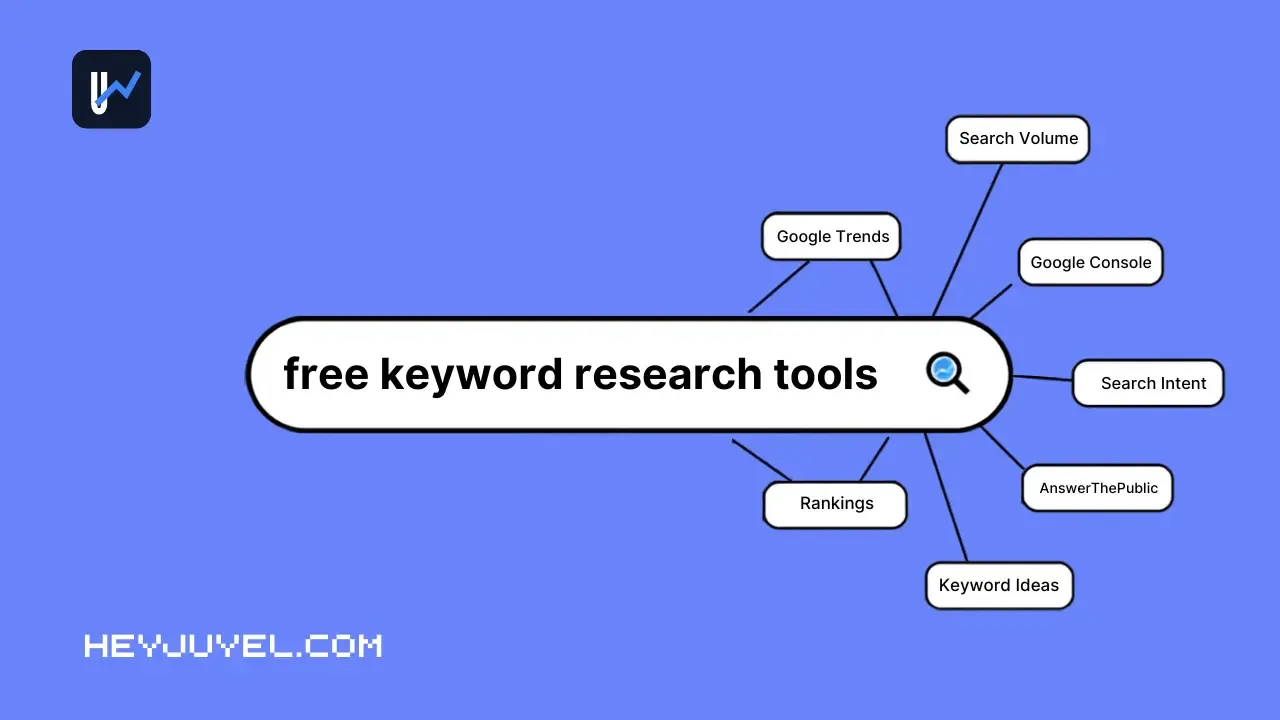
Stop paying for keyword tools you do not need. Here are the free keyword research tools that actually work in 2026 and how to use them together.
What Are Free Keyword Research Tools?
So you want to do keyword research without emptying your wallet. I get it completely. Ahrefs wants ninety-nine dollars a month and Semrush wants more than that, and while those tools are powerful, most people do not need that kind of firepower right away. Free keyword research tools are exactly what they sound like, meaning sites, extensions, and built-in Google products that give you search data, keyword ideas, and competition estimates for free. Some come straight from Google, like Search Console, Keyword Planner, and Trends. Others are third-party platforms that found a way to give away real functionality without going broke, like AnswerThePublic, AlsoAsked, Ubersuggest, and KW Explorer. The hard part is knowing which free keyword research tools actually deliver and which ones tease you with a free search and then demand payment, since a lot of them do exactly that. But the ones that work honestly work well enough that you might never need to pay for keyword data at all. I have been doing SEO for probably eight years and I still use these free keyword research tools regularly.
Why Free Keyword Research Tools Matter in 2026
Here is the thing about search right now. It is kind of a mess. AI Overviews show up on more than half of Google searches, and zero-click rates have crossed fifty-eight percent in the United States. You might look at those numbers and think keyword research is dead. I thought so too for a minute when I saw the stats. But the reality is more specific than the headlines suggest. Informational keywords, the ones where someone types a question and clicks a result, those are getting crushed. Google just answers the question on the search page now and nobody scrolls past the AI answer. But commercial keywords and transactional queries still work. When someone searches for best free keyword research tools or ahrefs alternative free or keyword research tutorial for beginners, they want to compare or buy. Google cannot satisfy that with a summary. Those keywords survive AI Overviews and those are exactly what free keyword research tools are good at uncovering. In fact, free keyword research tools help you spot commercial phrases by showing CPC estimates and competition levels, which tells you something about whether a search leads to action or just more reading. I have seen sites lose traffic overnight because somebody optimized for what the keyword planner said was high volume and ignored whether anyone actually wanted to buy. The last thing you want is to spend hundreds on software only to find the keywords you picked have no commercial intent and get eaten by an AI summary anyway. Free keyword research tools let you check intent and validate demand before you invest, which is the main reason to use free keyword research tools even if you could afford paid ones. Another thing about free keyword research tools is that the Google ones give you first-party data that no paid tool can match. Google Search Console shows you exactly what real people typed to find your site. Not estimates. The actual queries. Google Keyword Planner pulls volume straight from the ad auction rather than calculating from a third-party index. That is real data and it comes from free keyword research tools you already have access to.
Which Free Keyword Research Tools Actually Work
Let me just tell you what I use. Google Keyword Planner is where you start. It takes a seed term and returns related keywords with monthly search volume attached, all using data from Google's ad system. You need a Google Ads account but you do not have to spend anything on advertising. The catch is those volumes come in ranges like one thousand to ten thousand rather than exact numbers. That makes prioritization harder when you are choosing between two similar keywords. Running even a small campaign, something like a dollar a day, tightens those ranges up considerably. Google Search Console is probably the most underused free keyword research tool out there. It shows you the exact searches that already trigger your site along with impressions, clicks, and average position. That data is not estimated. It is your actual performance pulled straight from Google. If you already rank around position ten for something, a small content update can push you to page one. Google Trends tells you whether a keyword is gaining or losing interest over time, and a keyword with high volume but declining interest is a dead end. Trends catches that before you waste months on it. Then you have the third-party free keyword research tools. AnswerThePublic and AlsoAsked mine question data from Google to show what people actually ask instead of what you guess they ask. Three free searches per day each. Keyword Surfer is a Chrome extension that puts search volumes right on your Google results page with no signup needed. Ubersuggest from Neil Patel gives keyword ideas and difficulty scores on its free plan, also three searches a day. KW Explorer by Allintitle is probably the most generous free keyword research tool I have found. It gives you keywords from multiple sources plus search volume, CPC, competition, and even search intent classification. No credit card needed.
How I Do Keyword Research for Free
Here is my actual process when I need fresh keywords. Start with a seed topic and drop it into Google Keyword Planner, then export the full list of suggestions. Take that list to Google Trends and kill anything trending downward. Open Search Console and filter for queries where you sit between positions eight and fifteen, since those are your fastest wins and a small content improvement can push them onto page one. Then use AnswerThePublic or AlsoAsked to pull question-based keywords and evaluate search intent, because comparison words like versus or best signal commercial intent and those are the ones you want since they convert and survive AI summaries. Run your shortlist through Keyword Surfer to check difficulty signals on the actual SERP. If the top ten are forum threads or thin affiliate content, you found a real opening that most free keyword research tools will not flag automatically. You have to check the SERP yourself. The whole process takes maybe two hours once you get comfortable with free keyword research tools and the sequence they work best in. There is no secret shortcut, and any tool that promises instant keyword gold is probably selling you something. The real advantage of free keyword research tools is that they let you repeat this cycle of find, filter, validate, and check as many times as you want without a subscription. Try that with Ahrefs and Semrush and see how far you get on a trial.
The Honest Truth about Free Alternatives to Ahrefs and Semrush
Here is the part most articles dance around. Can free keyword research tools really replace Ahrefs or Semrush? The answer is yes for about eighty percent of what you need day to day and no for the remaining twenty percent. The twenty percent you lose includes competitor backlink analysis, rank tracking at scale, and difficulty scoring that accounts for your domain authority. Those are real limitations. But here is what most advice gets wrong. Most small sites and solo creators do not need that twenty percent at the start. They need keyword ideas they can trust, volume validation that is not made up, search intent they can understand, and enough competition data to prioritize their content. A solid stack of free keyword research tools covers all of that. Use Google Keyword Planner for volume. Use Search Console for your own performance. Use Trends for direction and seasonality. Use Ubersuggest or KW Explorer for difficulty estimates. That combination gives you keyword discovery, demand validation, and content prioritization without a monthly subscription. You cannot spy on competitors because no free keyword research tool tells you exactly what terms your competitors rank for. But ask yourself whether you actually need that right now. Probably not in month one. Probably not in month six. The honest answer about free keyword research tools is that they cover day-to-day SEO needs for most people who are early in their journey. Upgrade from free keyword research tools only when you hit a specific wall that slows you down, not because a landing page told you to.
Frequently Asked Questions About Free Keyword Research Tools
Can I do keyword research without paying for Ahrefs or Semrush?
Yes. The combination of free keyword research tools like Google Keyword Planner, Search Console, Trends, and a third-party option like Ubersuggest or KW Explorer covers keyword discovery, volume validation, intent analysis, and difficulty estimation. You lose competitor backlinks and rank tracking. For most people, that trade-off is acceptable.
What is the best free keyword research tool overall?
No single winner. Use Google Keyword Planner for volume data, Search Console for your own site performance, and Trends for direction. Pick one third-party free keyword research tool like KW Explorer or Ubersuggest to fill the gaps. Stack them together.
How many searches per day do free keyword research tools allow?
Google Keyword Planner is unlimited with an Ads account. Trends is also unlimited. AnswerThePublic and Ubersuggest give about three searches each day on their free tiers. KW Explorer offers a generous daily allowance, and Keyword Surfer is effectively unlimited.
Do free keyword research tools show accurate volume?
Google Keyword Planner shows ranges unless you run campaigns. Third-party free keyword research tools estimate, and their accuracy varies by source. Treat numbers as directional guidance. Cross-check before deciding.
Are free keyword research tools worth using in 2026?
Yes, probably more than ever. The shift toward commercial keywords makes focused research critical, and free keyword research tools give you enough data to find opportunities without paying monthly. Start with free keyword research tools and upgrade only when you hit a real limitation that costs you more time than the subscription would. Most people never reach that point.