


Crawl4AI: The Free Tool That Shows You Your Website the Way ChatGPT Sees It
By Juyel Rana · November 17, 2026 · Updated November 17, 2026
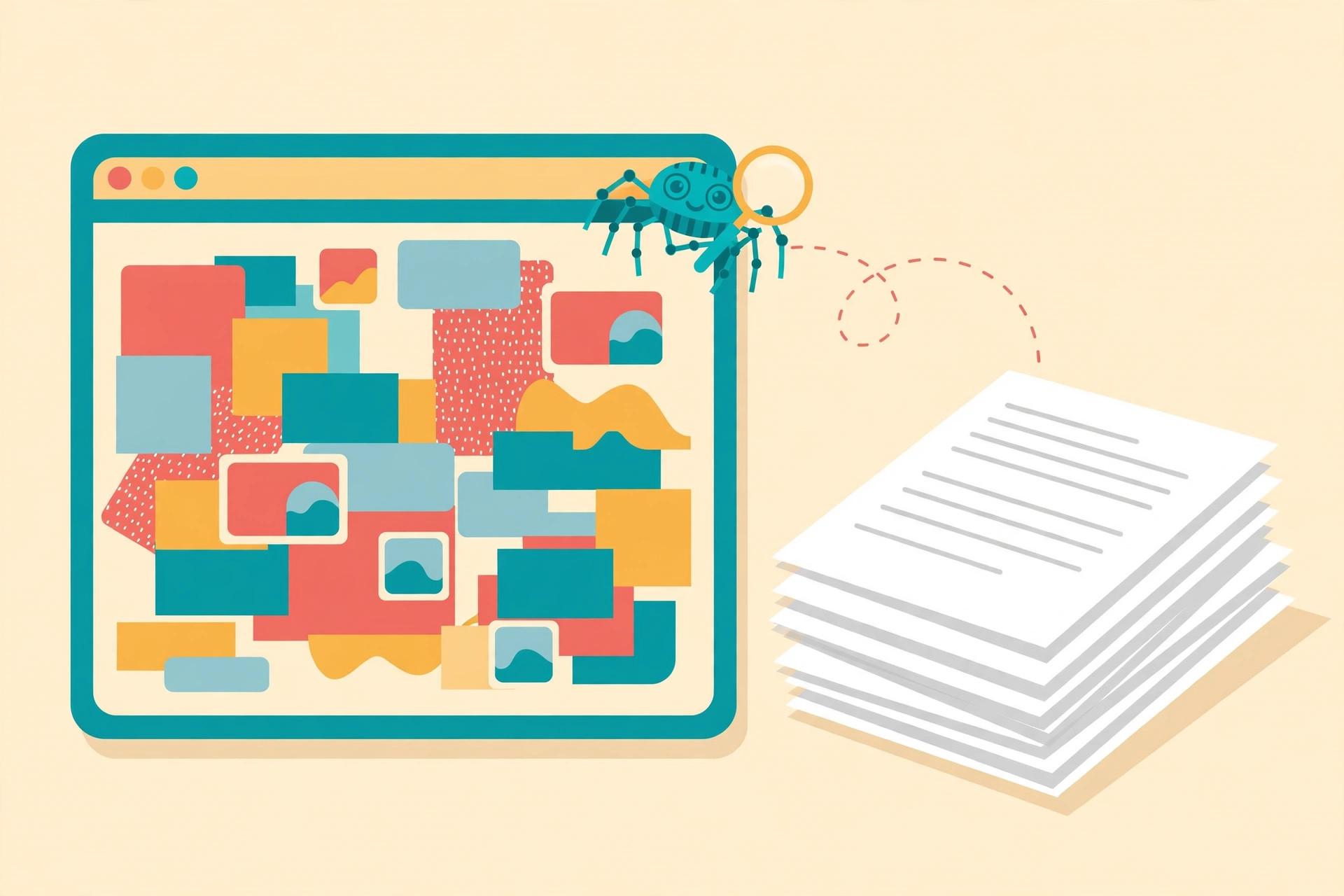
Ask ChatGPT who the best plumber in your town is, and it will answer from text it has read somewhere. It has never seen your homepage. Not really — not the colours you picked, not the hero image you paid for, not the layout you fussed over for a week. What it has seen, if it has seen your site at all, is the words: pulled out, stripped of design, and handed over as plain text.
That gap between what your site looks like and what an AI actually reads is worth checking. And there's a free tool that lets you check it in about ten minutes.
It's called Crawl4AI. It's open source, it's free to run yourself, and around 87,000 people have starred it on GitHub as of mid-November 2026. It crawls a web page and hands you back clean Markdown or structured JSON — the page with the design peeled off, ready for a language model to read. For an SEO, that's not a developer toy. It's a mirror.
What Crawl4AI actually is
Crawl4AI is a Python library built by a developer who goes by UncleCode. Point it at a URL and it fetches the page — rendering JavaScript with a real browser behind the scenes, so it sees what a visitor sees, not just the raw HTML — then returns the content as tidy Markdown, or as structured data if you ask for that instead.
A few facts that matter before you try it:
- It's Apache-2.0 licensed, which means genuinely free, including for commercial use. No account, no API key, no signup to run the library on your own machine.
- It has passed 21 million PyPI downloads, so this isn't a weekend experiment — it's widely used, and it gets regular releases.
- It can crawl whole sites, not just single pages, and it can extract specific fields from pages using CSS selectors or language-model prompts.
- There is also a hosted version, Crawl4AI Cloud, with a free tier (1,000 credits a month, no card required, according to the project's GitHub page). That's a separate product from the free library, and it costs money once you go past the free credits.
Installation is one command if you already have Python: pip install crawl4ai. A basic crawl is a few lines of code. If the words "a few lines of code" make you close the tab, hold on — the Cloud API exists precisely for that, and I'll get to who should and shouldn't bother below.
Why an SEO should care
Most of my AI-search advice comes down to the same idea: citations go to pages whose text answers the question clearly. But "your text" is doing a lot of quiet work in that sentence. The text a person reads on your page and the text an AI system pulls from your page are often two different things. Cookie banners, navigation menus, related-post widgets, popups, footer links — a lot of sites serve AI systems a soup of all of that, with the actual answer buried somewhere in the middle.
Run Crawl4AI on your most important page and read the Markdown it gives you. That's roughly what a machine reader is working with. Three things tend to jump out immediately:
- Your main answer might sit three screens down in the raw text, after a pile of menu and sidebar content.
- A page you think is thorough might come back surprisingly thin, because most of what fills the screen is images, buttons, and design rather than words.
- A competitor's page that keeps getting cited probably reads, in plain Markdown, like a straight answer with clear headings — no drama, no clutter.
None of that is a ranking factor in the old sense. It's a visibility check for the new one: when an AI system has to choose whose words to quote, it quotes the words it can actually find and understand.
What it's good for — and what it's not
Good for:
- Seeing any page — yours or a competitor's — as raw text, the way a machine reader sees it.
- Pulling clean content out of JavaScript-heavy pages to check whether the content is really there when a crawler renders it.
- Building your own little audit: crawl your blog archive, skim the output, and spot the thin pages in an afternoon instead of opening fifty tabs.
- Feeding content into your own AI workflows — a personal index of your site you can ask questions about, for example.
Not good for:
- Rank tracking. It doesn't know where you rank and doesn't care. Use a rank tracker for that.
- Replacing a technical SEO crawler. It won't audit your redirects, your hreflang, or your crawl budget. Different job, different tool.
- Anyone who refuses to touch a terminal. The library is Python, and there's no getting around that. The Cloud API is the no-code route, but then you're paying once the free credits run out. Be honest with yourself about which camp you're in before you invest an afternoon.
Three checks worth running this week
If you do try it, don't just crawl your homepage and admire the output. Run these three instead.
1. Your money page against the page that keeps getting cited. Pick one service or product page that matters to you, and one competitor page that shows up in AI answers for the same query. Crawl both, put the two Markdown files side by side, and read them like a stranger would. Which one answers the question faster? Which one buries the answer? Fix the gap, not the design.
2. Your JavaScript-heavy pages. If parts of your site load content with JavaScript — tabs, accordions, embedded widgets, anything that appears after the page loads — crawl those pages and check the content is actually in the output. If it isn't there for Crawl4AI, there's a fair chance it isn't there for other machine readers either.
3. Your blog archive. Batch-crawl your posts and skim. You're looking for the posts that come back as a paragraph and a half of real content wrapped in boilerplate. Those are the pages an AI system has nothing to quote. Shortlist them for a rewrite — or for a decision that they don't deserve to exist.
Two honest caveats
First, if you self-host the Docker server version, keep it updated. It's had a run of security fixes during 2026, and an outdated crawler server left open to the internet is the kind of thing that quietly becomes someone else's problem. The plain Python library on your own machine is the simpler, safer starting point.
Second, remember what this tool is for. It shows you the text. It doesn't fix your content, earn you backlinks, or make ChatGPT mention you. The pages that get cited are still the ones with real expertise, real depth, and real authority behind them — Crawl4AI just lets you see whether your pages are even in the running.
Keep reading on heyjuyel.com
- How to Get Cited by AI Search in 2026: A Practical GEO Playbook for Small Businesses
- Ranking on Google Doesn't Mean ChatGPT Will Cite You
- WHAT PEOPLE WANT ep-05: Does ChatGPT Even Mention You?
- OpenSEO: The Open-Source SEO Tool That Costs $10 a Month
- WordPress Speed in 2026: The Fixes That Actually Move Core Web Vitals
Sources
Want help getting found?
If AI search is already sending your competitors the clicks that used to be yours, a fresh pair of eyes on your site usually finds the problem faster than another month of guessing. I do free SEO audits for small businesses — a plain-English look at what's holding your site back in Google and in AI search, and what to fix first. Get your free SEO audit.