


Google's Homepage Now Remembers Your AI Searches — Here's Why That Matters for Your Business
By Juyel Rana · November 21, 2026 · Updated November 21, 2026
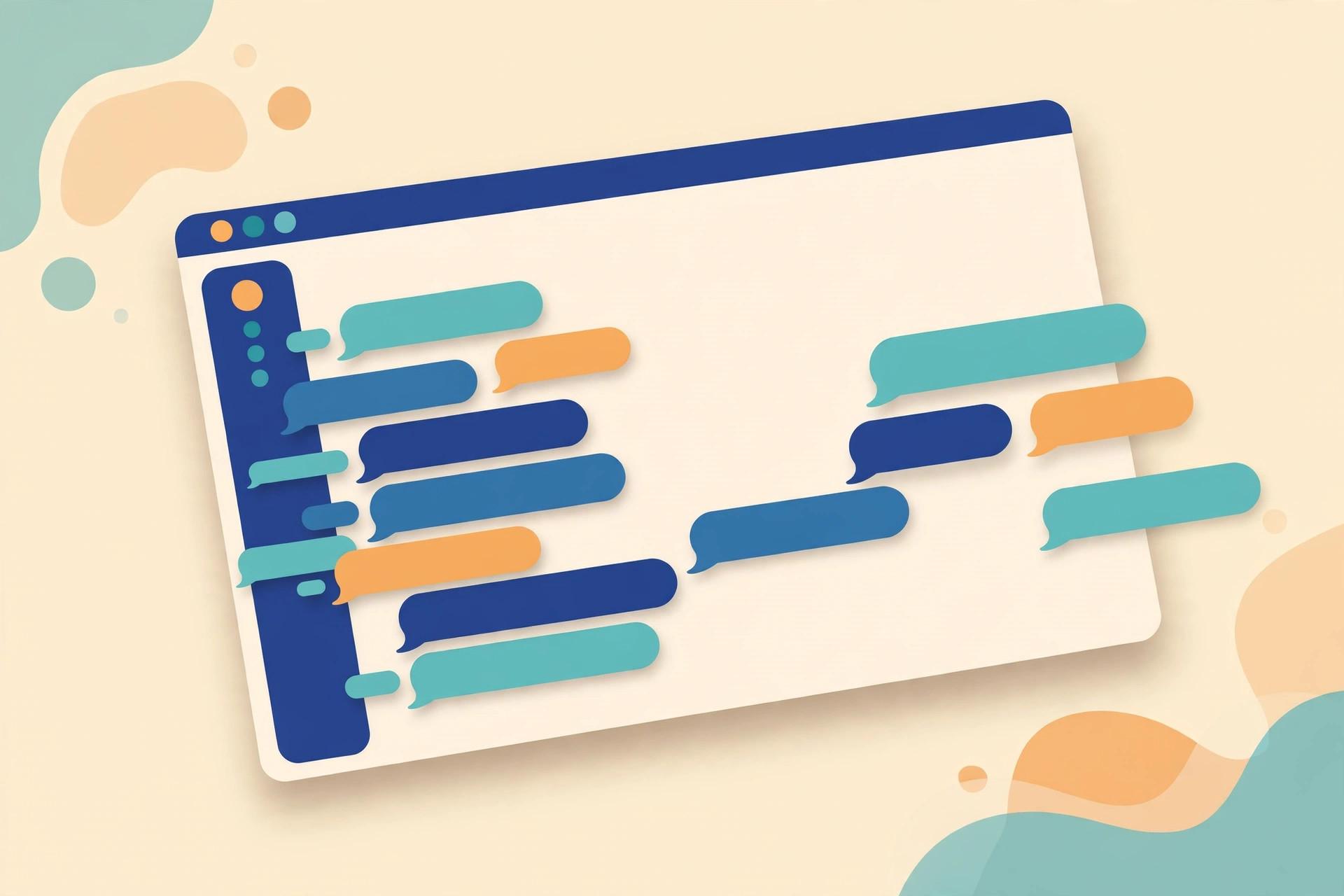
For almost thirty years, Google's homepage has been the same stubbornly blank page: a logo, a box, two buttons. Yesterday it stopped being that page.
On November 19, Robby Stein, Google's VP of Product for Search, announced on X that the desktop homepage is getting a collapsible sidebar — a thin rail on the left edge of google.com that keeps your recent AI Mode searches within reach. It's rolling out globally, gradually, so you might not see it yet. If it hasn't shown up for you, that's the rollout, not a bug.
What actually changed
Open google.com on a computer and, once the update reaches you, there's a slim rail down the left side. Click it and a panel opens with a few things in it: a New thread button, a Search threads option, a Notebooks section where you can add a notebook, and a Recent list of your past AI Mode conversations. Click any thread and it reopens in AI Mode, ready to continue.
The demo video Google shared also shows new shortcuts sitting under the search box — Create images, Ask about files, Brainstorm — plus an AI Mode button inside the search bar itself. One honest caveat: Google labelled the clip "screen images simulated," so the version that lands on your screen may look a little different from the video.
And before you ask: this is desktop only. Stein's announcement says nothing about phones, and as of today Google hasn't said anything about Android, iOS, or mobile browsers. Don't write the mobile angle into your plans yet.
Why Google bothered
Stein's own explanation is the interesting part. People, he wrote, are coming to Search with questions that "aren't just one and done" — and in testing, the sidebar "made a big difference for making progress and continuing to explore the web."
That's a quiet admission of how search behaviour has shifted. A question used to be a single query, a click, done. Now it's a thread: someone asks, gets an answer, comes back an hour later with the follow-up, then the one after that. The sidebar is Google building the homepage around that habit — less a place you visit, more a desk you return to.
It also fits a pattern. Two days earlier, on November 17, Google rolled out temporary threads in AI Mode worldwide — conversations with no history and no personalisation, the exact opposite of this sidebar. Google is now offering both: chats that vanish, and chats you can pick back up. Which one a person uses depends on the question.
One practical note: the sidebar only works if AI Mode history and personalised recommendations are switched on. With them off, AI Mode still answers, it just can't resume anything. Users can also delete individual searches or their whole AI Mode history whenever they like.
What this means if you run a business
Let's be clear about what this isn't. Google has said nothing about rankings or citations changing because of a sidebar. This is a distribution and habit change, not an algorithm update. Anyone telling you to "optimise for the sidebar" is selling something.
What it does change is repeat use — and repeat use is where the money is. Think about how a customer actually researches something worth buying. The first question is broad: "best CRM for a small team" or "plumber near me who does Sundays." The second question is where the decision happens: "what's the catch," "how much does it really cost," "is X better than Y." Until now, that second question meant starting over. With the sidebar, it's one click back into the same thread — and the page that answers the follow-up is the page that gets linked on the second visit.
So the pages worth strengthening aren't necessarily your homepage or your top-ranking post. They're the ones that answer the second and third questions: comparisons, honest pricing pages, "what's the catch" explainers, booking and how-to pages. If your site only answers the first question well, you're doing half the job in a world where people keep coming back to the same conversation.
Here's a quick check you can run yourself. Open AI Mode and ask a buying question from your own niche — the kind a real customer would ask. Then ask the follow-up, the awkward one, the one with the price or the drawback in it. Look at which pages get cited on that second answer, not just the first. If your competitors show up there and you don't, that's your gap, and it's a content gap, not a technical one.
Keep reading on heyjuyel.com
- Gemini 4 Hydrogen Is Now in Google Search for Everyone — Here's What Changed
- Google Replaced the Knowledge Panel With an AI Overview
- AI Overviews Cut Clicks by 40% — Now It's Proven, Not Just Suspected
- Google's Ask Maps Now Books Appointments — What Local Businesses Need to Check
- How to Get Cited by AI Search in 2026: A Practical GEO Playbook for Small Businesses
Sources
- Google's latest home page redesign makes Gemini even more prominent — Engadget
- Google's desktop homepage now keeps your AI Mode chats on the left — Digital Trends
- Google rolling out a "collapsible sidebar" for Google Search — Search Engine Land
Want help getting found?
If your customers are researching in AI Mode and your pages aren't the ones showing up on the follow-up questions, that's fixable — and it's exactly the kind of thing a proper audit catches. Get a free SEO audit and I'll look at how your site shows up in AI search, not just in the old ten blue links.